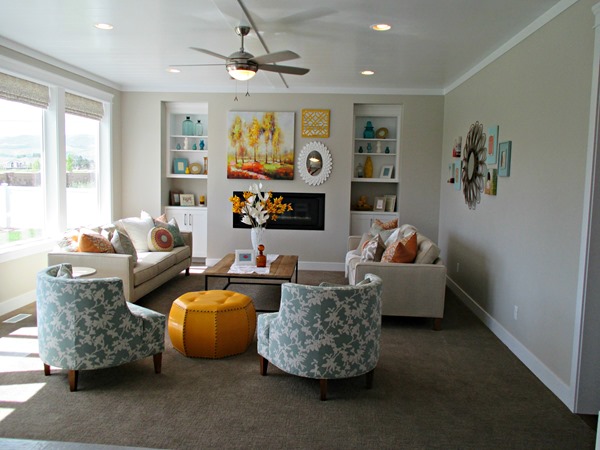
Balboa Mist by Benjamin Moore


The article Balboa Mist appeared first on http://www.favoritepaintcolorsblog.com
Balboa Mist by Benjamin Moore

In a country as vast as the United States, weather patterns vary wildly. As we write this, chilly Chicago is buckling down for a chilly winter, and the mercury has already dropped below freezing. Yet, down in the Sunshine State, Florida is still basking in the pleasant high seventies. There’s even a significant difference in temperature between some of Sharper Impressions’ numerous locations. But if you’re facing a cold spell this holiday season and are considering getting some exterior painting done, know that the weather outside can have a big effect on the end result.
The optimum temperature for outdoor painting is anywhere between 50 and 85 degrees but, while the recommended minimum and maximum temperatures vary depending on the type and even on the specific brand of paint you’re using, you don’t want to be painting at much below 40 degrees. Oil-based paints tend to leave you with a little more wriggle room than water- or latex-based paints but, as things cool down past 50 degrees, you’re likely to find that your paint begins to thicken and becomes more difficult to apply. Be sure to consult the directions on the paint tin in order to be sure how well you can expect it to perform in the temperatures in which you are working.
The real issue when painting outside is that the colder it gets, the longer the paint takes to dry. This in turn leaves the wet paint more susceptible to contamination from dirt, insects and pollen, which has the potential to spoil your perfect finish. Aside from the fact that you’ll get cold yourself while you’re perched up a ladder in the bitter winter weather, you’ll also find that actually applying your paint to the surface is more difficult when it’s cold.
A word of warning, too, when considering the optimum temperature at which to paint your exterior surfaces. Don’t forget that just because the air temperature outside your home is up in the mid forties, the wall you’re painting isn’t necessarily as warm. Just as the ground is several degrees cooler than the air during a ground frost, it’s possible for your walls to be colder than the air - and those couple of degrees could make the difference between your fresh new coat of paint adhering and not. It’s not unknown, even, for the temperature of different areas of the same surface to vary a little. There are electronic non-contact infrared thermometers you can use to accurately gauge the temperature of your wall, and which will allow you to judge whether it’s worth going ahead with the paint job or holding off for a warmer spell.
Remember that temperatures change through the course of the day, too. It’s important to keep a close eye on the weather forecast before getting started and while you’re painting - to be safe, you should ensure that the air temperature is predicted to remain above your paint’s recommended minimum for at least 36 hours. This will give you plenty of time both for the paint to dry and for you to do any necessary touch-ups to the finished job, as well as to accommodate for any unforeseen weather changes that might bring on a cold snap sooner than expected.
Of course, paint isn’t the only thing you’ll be using for your exterior decoration job. Doing things properly will likely involve a variety of materials in addition to the paint itself - and products like fillers, primers and caulking may not be suitable for use in lower temperatures, even if you’ve managed to track down one of the magic paint brands now on the market that can be used at temperatures as low as 35 degrees. Be sure to check the recommended minimum temperature for applying each component involved in the painting process, in addition to verifying that you are using types of brushes, rollers and other tools that are suited to the temperature and the resulting thickness of your paint, which may be different than it would be on a warmer day.
It’s a good idea to start as early in the day as you can, giving yourself plenty of time in the morning for preparation and beginning the actual painting from around 10am. This way, the surfaces you are painting will have had a chance to warm up from the previous evening’s chill. Ideally you want to be finished by mid-afternoon at the latest, so that your paint is at least well on the way to being dry by the time night falls, temperatures drop, and dew begins to accumulate and cause trouble for the paint’s adhesion.
As always, we recommend that you apply at least two coats of paint, so be sure to allow enough time for this - the winter weather makes for the perfect conditions to be caught out by bubbling and blistering between coats of paint applied too quickly after one another (don’t forget that, in cooler weather, the second coat will dry more slowly than usual, just as the first one does - expect four hours of drying time at 75 degrees to become six hours at 50 degrees).
When you’re painting, ignore the advice you’re given for summertime painting, which is to avoid direct sunlight and instead paint in the shade. In the winter, you want as much of the sun’s warmth as you can get, since it will help the paint to dry more quickly - so paint in direct light where you can, following the sun across your surfaces as it moves through the sky. Likewise, pay attention to what the wind is doing - this can have a heavy influence on the temperature of the surface you are painting and, if the wind is particularly strong, it can even swing things in the opposite direction and cause your paint to dry more quickly than is desirable.
It’s understandable that you want to keep your home looking fantastic both inside and out over the winter and, if you’re undertaking it at short notice, performing a paint job in cold weather might be unavoidable. But there’s plenty to keep in mind to ensure that it’s a success. If you would rather take it easy and curl up inside on those crisp winter mornings, talk to the Sharper Impressions Painting team, and we’ll take care of it all for you instead.
The post What To Know About Painting Exteriors In Cold Weather appeared first on Sharper Impressions Painting.
Whether you’re an owner of a massive facility that’s about to undergo a restoration or you’re a small business manager who’s contracting out a warehouse refinishing job, you need to know that your industrial painting contractor is properly trained in safe and effective painting practices. Fortunately, the Society for Protective Coatings (SSPC) has developed a sophisticated set of certification programs to help business owners like yourself make smart, safe decisions about their hires.
SSPC Safety Certifications for Industrial Painting Contractors
” QP1: Industrial Coatings, Steel Surface Prep
” QP2: Hazardous Paint removal
” QP3: Indoor Facilities Surfaces and Coating Apps
The SSPC Safety Certifications break down into three main classes – QP1, QP2, and QP3. A QP1 certified individual is deemed safe to do work relating to industrial coatings and surface prep for steel work. QP2 certified painters are qualified to remove hazardous paint. QP3 certified industrial painting contractors are qualified to prepare surfaces and coating applications for an indoor facility (open or covered).
SSPC Specialty Certifications for Industrial Painting Contractors
” QP6: Thermal Spray Prep/Metallic Alloys
” QP8: Polymer Coating/Cement Surfaces
The SSPC offers additional certifications for specialized industrial painting contractors, as well. The QP6 designation deems an individual safe and capable to perform work relating to prepping thermal sprays and coating surfaces of certain metallic alloys, such as aluminum and zinc. The QP8 certification, on the other hand, relates to an individual’s ability to manage polymer coating and cement surface jobs acceptably.
You can also look to other work certification boards, like OSHA (The Occupational Safety and Health Administration) to determine the “safety IQ” of a given industrial painting contractor. Of course, the SSPC and OSHA are only two of many organizations designed to promote and objectively evaluate industrial safety.
If you’re hiring an industrial painting contractor, get a full report on their team’s safety training. Also, be sure to provide information on special hazards or potentially dangerous materials at your facility. If necessary, get a lawyer to read over your contract and advise you.
Remember – a single accident or careless error could potentially lead to a series of lawsuits that can harm your business. Avoid the headaches by choosing an industrial painting contractor and an outstanding reputation for safety and the certifications to back up that reputation.
Painting Contractors was originally
published on http://wimbledonpainters.co.uk


For example, a living room cannot be altogether a dining room, a bedroom cannot serve a function of a study at the same time. In terms of psychology, the most important here is privacy and even intimacy of lives of house dwellers. On the contrary, an open interior is a designer’s realization of conception of an available society showing off its life, active, dynamic and communicative style of behaviour and, probably, the priority of social and business interests over the personal ones. Nowadays this type of house structuring is realized by way of flexible house planning, organizing a space which can be clearly seen from any place, which is divided not into rooms but into functional areas. Two centuries ago architects reached this type by creating an enfilade of adjacent rooms.
The problem of what type of planning to choose when creating harmonising interior can be solved very easily. Those who prefer loneliness, who avoid noisy parties and social contacts, will be satisfied with a close interior. And people who got used to be in the centre of attention, who strive for widening the circle of acquaintances, often associate such a choice with a psychological solitary confinement. Developing the design of a stimulating interior requires much more responsible and creative approach. It goes without saying that the shock therapy tactics is inappropriate here. Compensatory psychotherapeutic idea of stimulating design is realized by way of efficient use of two basic techniques: combination of close or open interior and some intermediate variant – half-open housing space. Let’s try to see everything in practice.
Suppose the task is in creating a stimulating interior for a person who experiences some difficulties due to his being unsociable, uncommunicative, being plunged into himself all the time. The first method is to create a single open space instead of a number of separate widely seen rooms (for example, a living room, a kitchen and a study) with one isolated room serving a harmonizing element. The second method is in partial limiting the degree of isolation of each of the rooms when massive walls are replaced by light transforming partition walls, curtain walls or glass panels. An approach to planning the stimulating interior for a person with impetuous, choleric temperament will be quite opposite by its goals but will have much in widely seen with the previous variant by its practical realization. Dominating here will be the tendency of enforcing and dividing single space areas by mobile partitions which visually reduce the volume of a separate room but do not make an impression of a completely isolated room.
Also very important is to think over a colour palette of decoration, general style of the premises as well as furniture and separate objects. Also with a psychological approach to interior designing this is the most important stage. There is no universal formula here. It is possible to give general recommendations, but only proceeding from a conventional division of temperaments into cholerics, sanguines, melancholics and phlegmatics and their psychoemotional characteristics. As an alternate option modern psychology suggests similar gradation into extraverts and introverts of active and passive types. It is clear that each type is very rare in its pure form – temperaments of most personalities can be referred to the mixed type.
Interior Designers London Read more
http://www.wimbledonpainters.co.uk


You can transform a bedroom closet design quickly, easily, and inexpensively by installing a modular closet system. There are many competing storage systems and products, so take a look at several systems before deciding.
There are two main types of do-it-yourself systems; those made of ventilation coated-wire components, and those made of solid particleboard components with a high pressure-plastic laminate.
Mixing solid-wood components with wire shelves and rod makes sense any cases, for instance…there are any items they want to look at and other they would like to store.
If you plan a system carefully, you can double the amount of storage area available.
It’s a good idea to have a few hooks but not too many or your closet will look messy. Slide-out drawers may not be worth the cost; simple and cheap shelving usually work just as well.
In addition to the usual bedroom closet design, think about under-the-bed storage, as well as under the eaves if you have attic space. But also think about smaller pieces like file cabinets, and freestanding storage.
A combination of drawers and cupboards, and open shelves with doors offers the most flexibility. In most cases the easiest way to plan is to start with a shelf or drawer unit somewhere in the middle. It often helps to divide a large closet in half or in thirds to make it easier to find things.
The blog post Bedroom Design is available on http://www.wimbledonpainters.co.uk/


Happy New Year’s Eve! It’s hard to believe it is the last day of the year, and it always amazes me as I look back on every year how much happens. Here are the most popular posts from 2015.
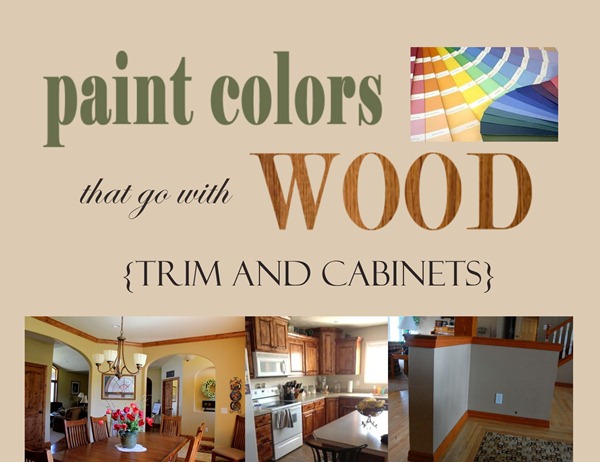
#1 – paint colors that go with wood

#2 – Paint Colors Featured on HGTV’s “Fixer Upper”

#3 – Top 10 Most Popular Paint Colors at FPC
#4 – Favorite Warm Gray Paint Colors
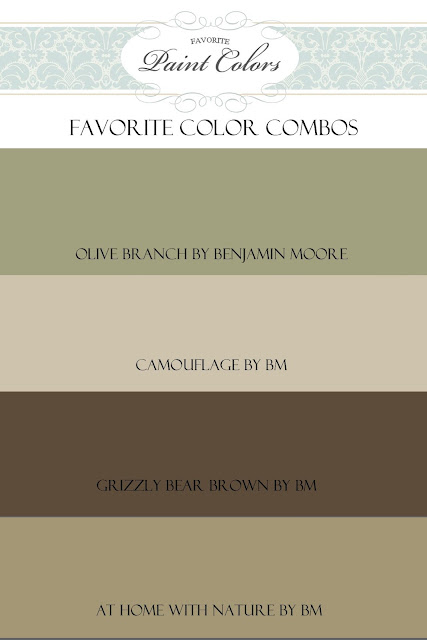
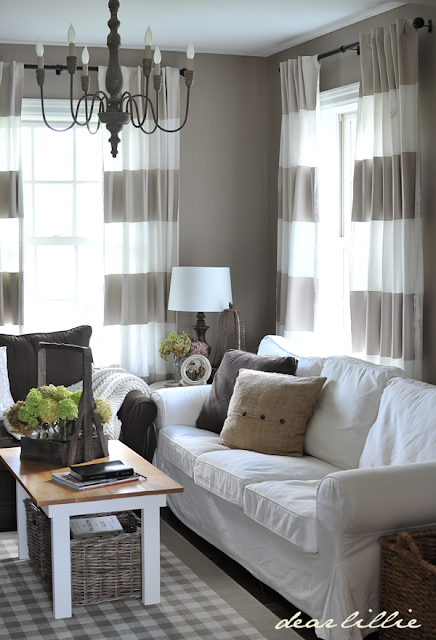
#6 – Cotswald by Benjamin Moore
#7 – Top 5 Paint Colors For Every Room In Your Home
#8 – Sea Salt and Coventry Gray
#9 – A Home Tour with Paint Color Scheme Ideas
Thanks for sharing 2015 with me! I hope you have a wonderful and safe New Year’s, I’ll be back next week (and next year 


Everyone loves to eat cake, which is nicely and perfectly decorated. But due to lack of decorating skill ones wish is not fulfilled up to the maximum level. Now with the help of cake decorating book one can easily decorate the cake and make it look more rich and delicious. These books are specially designed for preparing cakes. They also provide you with additional mouth watering recipes and tips to make your cake more delicious for consumption.
Cake Decorating Book is a perfect choice to decorate the cake. This book provides you essential tips, together with illustrated pictures to decorate your birthday cakes, Xmas cake, wedding cake and party cake. If you want to decorate the cake for any special occasion then you need to purchase a cake decorating book.
Now days you can find huge collection of such books online. This book can help you to decorate your cake in a professional manner. Cake Decorating Books not only help you to decorate your cake but it also helps you to make your cake delicious, which is an added advantage. Cake decorating book, which is offered online, requires no fundamental experience. With the help of cake decorating book you can prepare exclusive decorated pastries or cakes. This book is published in such a way that no one can refrain oneself from making a decorated cake. Each chapter carries new ideas and tips.
It is necessary that one should decorate the cake as it gives a distinct and appealing look that creates the desire to eat it. This cake decorating book is also perfect for beginners, which gives step by step instructions and guidance.
Decorating Tips was first seen on Wimbledon Painters and Decorator Services